Preface
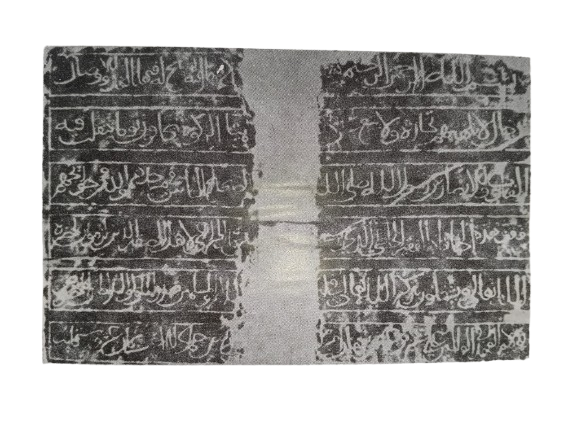
The earliest extant inscription established following the consolidation of Bakhtiyar Khalji’s rule in parts of Bengal was discovered at the Dargah of Hazrat Shah Makhdum in Birbhum. This significant artifact was unearthed by Babu Siddheshwar Mukhopadhyay, a local school teacher and history enthusiast. Dated 618 AH (1221 CE), this stands as the first complete and chronological epigraphic record installed after the conquest of Bakhtiyar Khalji.
This inscription serves as a primary historical testament to the pivotal role played by Sufis in the propagation of Islam, the formation of Muslim society, and the institutionalization of Muslim rule in Bengal. A scholarly analysis of this historic inscription was conducted by the renowned historian Dr. Abdul Karim. In his study, Dr. Karim focused extensively on the titles (Laqab) and designations of the Khalji rulers as mentioned in the text. While he consciously refrained from discussing the broader social and cultural history surrounding the inscription, it remains a paramount document for tracing the historical leadership of Sufis in establishing political rights and social structures for Muslims in Bengal.
Recognizing its profound historical significance, we are sharing Dr. Karim’s analysis with our readers. This discourse has been sourced from Dr. Abdul Karim’s seminal work, Corpus of the Arabic and Persian Inscriptions of Bengal, published by the Asiatic Society in 1992.
For the convenience of the reader, the Arabic and Persian honorary titles mentioned in the inscription have been presented in italics. The text has been reproduced here verbatim, without any editorial modifications. We reserve the right to provide our own scholarly analysis or remarks on this subject in the future, should it be deemed necessary.
***
Inscriptions of Sultan Ghiath al-din ‘Iwad Khalji and governors of the Sultans of Delhi Sultan Ghiath al-din ‘Iwad Khaljli (610-24 A. H=1213-27A.D.)
Sian inscription, Birbhum, W. Bengal, India
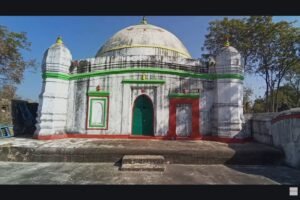
The inscription was discovered from Sian in the Bolpur P.S. of Sadar or Suri sub-division of Birbhum district in West Bengal. The epigraph was lying in the tomb of a saint called Makhdum Shah. Professor Sukhamay Mukhopadhaya of Visva-Bharati University informs me in a letter that Babu Siddheswar Mukhopadhaya, a revered school teacher, and one who is deeply interested in antiquities, actually discovered the inscription.[1] Dr. Z.A. Desai who first published this inscription received its impression from the Superintending Archeologist, Archeological Survey of India, Eastern Circle, Calcutta, in January, 1973.
The epigraph happens to be the earliest mural record of the Muslim rulers of Bengal. This has come down to us in a damaged condition. Z.A. Desai writes[2], “The tablet on which it is engraved has undergone some damage. The circumstances under which this happened are not known but as a result of the damage, the slab was broken into two pieces, one of them also developing a crack diagonally from the right side top towards left, and both pieces losing some portions on one edge each. From the way the side portions are missing, the left in one case and the right in the other, leaving almost vertical edges in both cases-it would appear that the tablet might have been into two equal parts to be utilized for building or like purpose”. It is more interesting to note that the tablet originally belonged to a Hindu building, because its reverse bears a Sanskrit inscription of the Pala period.[3]
The language of the inscription is Arabic, in a fairly good calligraphy, a mixture of Naskh and Riqa scripts. About the writing, Z.A. Desai writes as follows[4], “It will be noted that the writing is not in relief as the inscriptions in Arabic script of India including its eastern parts generally are, but is incised or cut into the stone in the manner of Indian epigraphs, a feature noted among some earliest inscriptions of India from other parts of the country like Gujrat also. Again, while the calligraphy of the record does portray Naskh with some artistic flourishes, it can not be said to contain any of the features that later on became the watermark of the highly decorative and pleasing typical calligraphical styles of inscriptions from the eastern part of the Indian sub-continent. But the style of writing on the whole even in its present fragmentary and damaged state is of a fairly good quality”.
The inscription consists of six lines of writings. The first two lines and a few words in the third contain two verses from the Holy Quran, appropriate to the object of the record and is preceded by Bismillah. The rest of the third line gives a short tradition of the Prophet. In the fourth line and almost half of the fifth line, mention is made of endowment of the Khanqah for ahl-al-Suffa or people belonging to the Sufi order. The rest of the fifth line and the sixth line bear the name of the ruler with titles and date. The name of the builder or the man who made the endowment has been lost, but his father’s name, Muhammad al-Maraghi is preserved.
Ref:
1) Annual Report in Indian Epigraphy (ARIE), 1972-73, No. 1, p. 20.
2) Indian Archaeology, 1972-73-A Review, New Delhi 1978, p. 52.
3) Z.A. Desai, EIAP, 1975, pp. 6-12, Plate 1(b).
4) Sukhamaya Mukhopadhaya: Banglai Muslim Adhikārer Adiparva (Early phase of Muslim Rule in Bengal) Calcutta, 1988, pp. 40-44, plates 2-3.
Z.A. Desai’s reading of the text and translation are as follows:
Text
1 – بسم الله الرحمن الرحيم [ في بيوت اذن الله ان ترفع و يذ ] كرفيها اسمه ليسبحله فيها بالغدو والاصال
2 – رجال لا تلهمهم تجارة ولا بيع عن ذكر [ الله و اقام الصلوة ] و [ اي ] ماء الزكوة يخافون يوما تتقلب فيه
3 – القلوب والابصار عن رسول الله صلى الله عليه وسلم في ] الصحيحالناس في مساجدهم والله في حوايجهم
4 – وقف هذه الخانقاه الفقير الخاطى الذى يرجو [ الى رحمة ربه ؟ بن محمد المراغى لاهل الصفة الذين يلزمون الحضرة
.5 – الله تعالى و يشغلون بذكر الله تعالى فى ايا ا م الدولت غياث الاسلام والمسلمين صدر الملوك والسلاطين المخصوص
6 – بولايت العهد في العالمين على شير بن عوض برهان امير المو [ منين في يوم ? السا ] بع من جماد الآخر سنة ثمان عشر و ستماية.
Translation
- In the name of Allah, the Beneficent, the Merciful. (In houses which Allah has permitted to be exalted and that) His name may be remembered in them; there glorify Him therein in the mornings and evenings;
- men whom neither merchandise nor selling diverts from the remembrance [of Allah and the keeping up of prayer and] the giving of poor-rate; they fear a day in which shall turn about;
- The hearts and the eyes[5]. [saying quoted] from the messenger of Allah, may Allah’s [peace and salutations be upon him in] the Şahih. ‘Men are in their prayer-houses (mosques) and Allah is looking after their needs’.
- This Khanqah was (built and) donated by the humble creature (al-faqir), the sinful, the one who hopes [for the mercy of his Nourisher] son of Muhammad al-Maraghi (i.e. by origin of Marágha), for the benchers [Ahl-i-Suffa i.e. ascetics, Sufis] who all the while abide in the presence;
- of the Exalted Allah and occupy themselves in the remembrance of the Exalted Allah in the [time of the government? of the Shelter?] of Islam and the Muslims, Chief among the monarchs and the Sultans, one who is specially favored;
- by the lordship of the Time in the Worlds, ‘Ali Sher son of ‘Iwad, Burhanu Amir Al Muminin (lit. Proof of the Commander of the Faithful), on the seventh day of [the month of] Jamada II, year [A.H.] eighteen and six hundred (7 Jamada II 618/29 July 1221).
This is a very important inscription and its discovery has added to our know-ledge. Firstly, this is the earliest inscription of the Muslim Sultans of Bengal so far discovered from Bengal. Formerly the Gangarampur inscription of Jalal al-din Musud Jani was taken to be the earliest inscription discovered from Bengal, and Bari dargah (Bihar) inscription of ‘Izz al-din Tughral Tughan Khan was the earliest inscription issued by a Bengal ruler, but that was found in Bihar. Secondly, this inscription records the construction of a religious institution, apart from mosque and madrasah and making endowment for the same. We know from Minhaj that Bakhtyar Khalji after making Lakhnauti his seat of government, founded mosques, madrasahs and khanqahs in various parts of his territory.[6] About Sultan Ghiath al-din ‘Iwad Khalji also Minhaj says, “In that country (Lakhnauti) many marks of his goodness remained. He founded Jami and other mosques, and conferred salaries and stipends upon good men among the Ahl-i-Khair like the, ‘ulama, mashaikh and saadat, and other people acquired, from his bounty and munificence much riches”.[7]
This inscription confirms the above statements of Minhaj. In our previous studies[8] we have seen that Bengal became a stronghold of the Muslim Sufis from the beginning of the Muslim rule or even from before. This epigraphic evidence of endowment having been made for a khanqah, giving facilities to the Ahl-i-Suffa for their devotional exercises, lends additional and very dependable support to our previous conclusions. Z.A. Desai elaborates the point in the following manner.[9]
“The inscription under study thus may be taken to corroborate the literary sources which refer to the construction of khanqahs immediately after the conquest of Bengal in c. 1204 and thus provide indirect evidence for the fact that among the various factors that contributed to the progress of Islam in Bengal, the Sufis played no less important part. It would also indicate that in the region comprising western part of proper Bengal, Islamic saintly establishments were already at work at this period, and probably since earlier times. The find spot of the record-the tablet seems to have belonged to Sian only as is also clear from the Sanskrit record also lends weight to the theory that unlike elsewhere in the country, Islam spread mostly in the villages in this part of the country.”
In a note Dr. Desai says, “As a matter of fact, this is perhaps the only record specifically referring to a Khanqah that has been found in Bengal”.[10] This is not probably correct, the inscription of Abu’l Fath Yuzbak from Sitalmat in Nawgaon (now a district, but previously a subdivision of Rajshahi district), records the construction af a sacred building “for the (use of) the pious and the devout, lovers of the Quran…… upright, truthful men and reciters of (Allah’s name) day and night…… and of the purified…”.
Though the word khankah is not found in the Sitalmat inscription, because it could not be fully deciphered due to its damaged condition, the wordings show that this building also served the purposes of a khanqah. This inscription also refers to a bequest.
The inscription was issued during the reign of Sultan Ghiath al-din ‘Iwad Khalji when his son ‘Ali Sher was governor in Birbhum area. Minhaj says that when he came to Lakhnauti in 641 A.H. (1243-44 A.D.), he saw various signs of good-works of this Badshah (‘Iwad Khalji). The kingdom of Lakhnauti was divided into two parts on both sides of the Ganges. The southern part was called Ral (Radha) and the city of Lakhnor was situated in this part. The northern part was called Barind (Varendra) and the city of Deoket (Devkot) was situated in that part. There was a high way connecting Deokot and Lakhnor with Lakhnauti (the capital). It was ten days journey and it was built by ‘Iwad Khalji to save the country from inundation and to facilitate movement of people from one place to another.[11] We may also add that ‘Iwad built this road for quick movement of the army to his frontier posts. Lakhnor is identified with Nagore in Birbhum district. This inscription proves that Ghiath al-din ‘Iwad Khalji appointed his son ‘Ali Sher governor of his southern province.
Dr. Z.A. Desai goes further and takes this inscription to prove that ‘Ali Sher was an independent Sultan and he takes ‘Ali Sher to be a new king in the list of Bengal Sultans. He writes as follows.
“But far more important aspect of the inscription is what I take to be the mention of a new ruler. As the students of medieval Indian history know, the phrases used for the persons in whose time the Hospice was endowed, viz. (Ghtyath) ul-Islam wal-Muslimin, Sadrul-Mulük was-Salațin al-Makhşüs biwilayatil-ahd fil-alamin preceding the name ‘Ali Sher son of ‘Iwad and Burhanu Amiri Al-Muminin, following it and the like are used in inscriptions, coins and historical works only for monarchs and rulers. The epigraph can be reasonably taken to refer to his reign as an independent monarch and not a governor.
In other words, the epigraph mentions a new king of Bengal who at least ruled at the time of the record, to wit, 29th July, 1221, a fact of which we were totally in dark till now.
“Who is this new king then? He is ‘Ali Shir son of ‘Iwad. By the latter is in all probability meant the Khalji king of Bengal Ghiyath ud-din ‘Iwad”.
It may be noticed that in this inscription, ‘Ali Sher does not take the title of Sulțân, he is called simply ‘Ali Shër bin ‘Iwad. The expressions in the inscription, which according to Desai are used only for monarchs and rulers, are not sufficient to prove that ‘Ali Sher was a king. Moreover, these expressions were used not only for monarchs, we have several inseriptions of Bengal where some of these expressions were used for governors also.
The following examples will suffice:
1.
Bari dargah (Bihar) inscription of ‘Izz al-din Tughral Tughan Khan
‘Izz al-din Tughral, the governor is called Ghiath al-Islam wa’l-Muslimin, Mughtth al-Mulük wa’l-Salāțin.
2.
Gangarampur inscription of Jalal al-din Mas’ud Jant
Burhan Amir al-Mumintn. Jalal al-din Mas’ud Jani, the governor is called Malik Mulük al-Sharq and
3.
Sitalmat Inscription of Abi’l Fath Yuzbak
Abi’l Fath Yüzbak, the governor, is called Maghtth al-Islām wa’l-Muslimin and Nasir Amir al-Mu’minin
Abi’l Fath Yüzbak later assumed independence, but while issuing the inscription, he was a governor.
So, the only expression which is found in this inscription, but not in any other of the Bengal Sultans is, Sadr al-Mulak wa’l-Salasın. We have one expression Sadr al-Millat wal-din in an inscription of Jalal al-din Muhammad Shah but we are not sure whether it was the name of the governor or his title. Moreover it is different from the expression of this inscription. Any way, from the single expression, which Desai renders as “Chief among the monarchs and the Sultans”, it cannot be said that ‘Ali Sher was a king particularly because he does not claim himself to be a Sultan. Dr. Desai does not attach importance to the words wilayat-al-‘ahd which means ‘dignity of heir apparent’[12] and this alone proves that ‘Ali Sher was heir apparent and was then holding the governorship under his father Sultan Ghiath al-din ‘Iwad Khalji. Keeping in view the words wilayat al-‘ahd, the expression Sadr al-Muluk wa’l-Salatin may be taken to mean that he was chosen by his father to be the heir-apparent of the kingdom.
Unfortunately, Dr. Desai goes further. To prove that ‘Ali Sher was a king, he even expressed the opinion that Sultan Ghiath al-din ‘Iwad Khalji died before 618 A.H., the date of this inscription. Though this opinion is unwarranted, his arguments may be summarized below:
1. Desai first tries to prove that Ikhtyar al-din Balka Khalji who was defeated and killed by Sultan Shams al-din Iltutmish of Delhi was a son of Ghiath al-din ‘Iwad Khalji.
2. He does not accept the dates 620 and 621 A.H. read in the coins of ‘Iwad Khalji and he says, “It is doubtful if these two coins have been correctly assigned to him”. As for the coin published by Hoernle he suggests a correction to say that the coin bears the name of ‘Ali Sher.
The first argument is beside the point. Various scholars have given opinions about the identity of Ishtyar al-din Balka Khalji and according to some he was a son and according to others he was a partisan of Sultan Ghiath al-din ‘Iwad Khalji. But whether Bałka Khalji was or was not a son of ‘Iwad Khalji is immaterial for our present discussion. He ruled for about eighteen months, but was ultimately defeated and killed by Sultan Shams al-din Iltutmish in the beginning of 628 A.H. (November 1230 A.D.). According to Minhaj, Ghiath al-din ‘Iwad Khalji was killed by the Prince Nasir al-din Mahmud, eldest son of Shams al-din Iltutmish in 624 A.H. (1227 A. D., 624 A. H. beginning from 22nd December 1226 A.D.). So Balka Khalji, if he was a son of ‘Iwad Khalji, survived his father and ruled for eighteen months not only after his father’s death, but also after the death of Nasir al-din Mahmud. So, the argument centering round Ikhtyar al-din Balka Khalji, in no way helps to support Desai’s contention that ‘Ali Sher was an independent king or Ghiath al-din ‘Iwad Khalji died before 618 A.Η.
The second argument relates to the reading of coins of Sultan Ghiath al-din ‘Iwad Khalji. We have already studied these coins and in my Corpus of the Muslim Coins of Bengal (down to A.D. 1538), the coin, the reading of which has been challenged by Desai, is illustrated in Plate 1, No. 2. The word yad (يد) is quite clear and I could not read the word Sher (شير) as has been read by Z.A. Desai. Even if this coin is left out of consideration, there is undoubted evidence in the Tabaqat-i-Nasirt of Minhaj that Sultan Ghiath al-din ‘Iwad Khalji was alive long after 618 A.H. Minhaj categorically says that Sultan Shams al-din Iltutmish invaded Lakhnauti in 622 A.H.; ‘Iwad entered into treaty with the Sultan of Delhi. Minhaj also says that in 624 A.H. the Prince Nasir al-din Mahmud again invaded Lakhnauti, this time Ghiath al-din ‘Iwad Khalji was defeated and killed.[13] In view of these categorical statements of Minhaj, no one can say that Ghiath al-din ‘Iwad Khalji died before 618 A.H.
To clinch his point, Dr. Z.A. Desai terms Tabaqat-i-Nasiri of Minhaj-i-Siraj as a near contemporary source. Minhaj came to Bengal only seventeen years after the death of Ghiath al-din ‘Iwad Khalji. The eye-witnesses of the events of the reign of ‘Iwad Khalji were still living, so he could collect information from them, and he actually mentions Mu’tamid al-Daula, one of his sources. Since Minhaj was not present in Bengal during the reign of ‘Iwad, he may be called a near contemporary, but he was present in Delhi in the reign of Iltutmish and he followed the King’s entourage to many places. So when he says that Iltutmish invaded Lakhnauti in 622 A.H. and Nasir al-din Mahmud attacked and killed ‘Iwad in 624 A.H. his evidence cannot be doubted. Dr. Desai also blames the scholars for not giving proper attention to inscriptions. He says[14], “The inscriptions have in this regard, already, received due attention from us and almost all the inscriptions from Bengal that are known, have been correctly deciphered and listed or published in the epigraphical publications of the Archaeological Survey of India (Annual Reports on Indian Epigraphy and Journal Epigraphic Indica Arabic and Persian Supplement) but unfortunately our scholars seem to be unaware of these publications”.
Dr. Desai is an epigraphist, and a successful one, so he may feel complacent about the inscriptions published by his department so far, but I am not aware of any instance where scholars/historians have purposely ignored the evidence of inscriptions. It is however, possible that some scholars may have missed some inscriptions, here and there and may be that the publications on inscriptions did not reach them in time.
So, to conclude about ‘Ali Sher of this inscription, we think that he was a governor of his father Ghiath al-din ‘Iwad Khalji, or his name is mentioned in the inscription simply as heir-apparent (wilayat al-ahd).
The other name mentioned in the inscription is Muhammad al-Maraghi, whose son made the endowment, but unfortunately the name of the donor is lost. Maragha, as has been pointed out by Desai is a town in Adharbaijan province of modern Iran. The person must have come to Bengal after the establishment of a Muslim kingdom by Bakhtyar Khalji. He was either a trader or an officer of sufficient means. The saint Makhdum Shah, in whose dargah the epigraph was found set up, is not known from any other source. Desai thinks that Makhdum Shah does not appear to be old, he may be correct. In any case the saint Makhdum Shah is not known from early records.